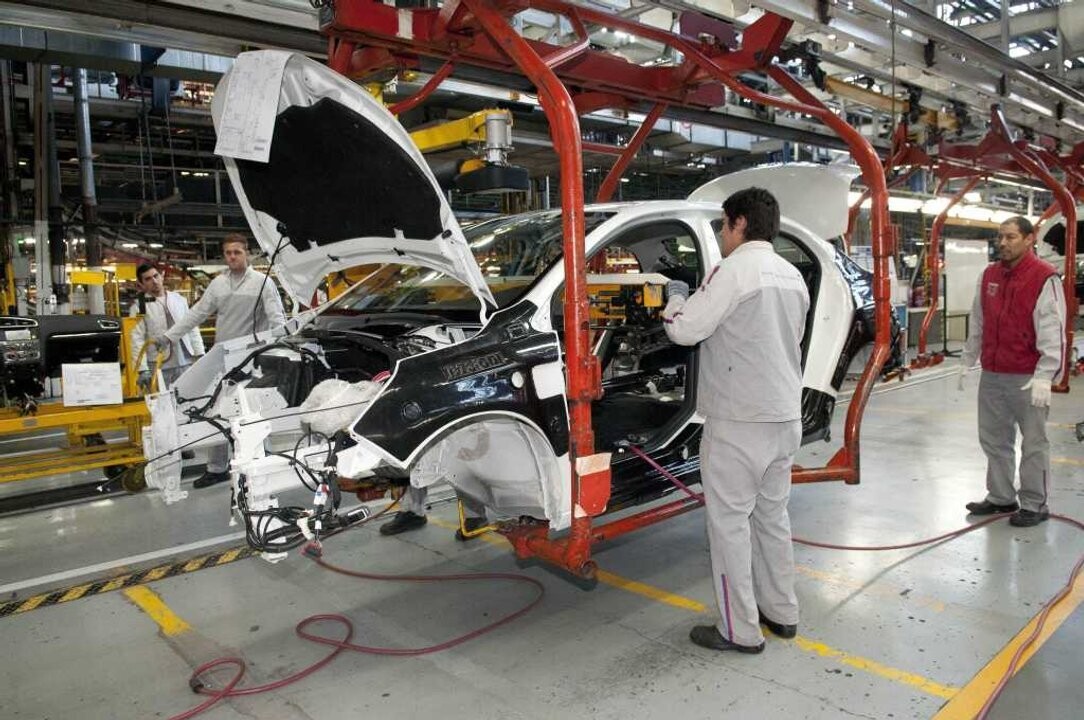
Buenos Aires, January 14 (NA) – In a still challenging scenario for industrial activity, the utilization of installed capacity in industry fell to its lowest level since last March, according to INDEC. In November, it stood at 57.7%, when in March it had been 54.4%. Additionally, in the same month of 2024, it had been much higher, at 62.3%. According to specialists consulted by the Argentine News Agency, the data reflects that industry continues to be one of the most affected sectors, behind construction. In contrast, the sectoral blocks that present levels of installed capacity utilization above the general level are oil refining (86.5%), basic metal industries (73.3%), paper and cardboard (71.2%), food and beverage products (64.2%), non-metallic mineral products (58.2%), and substances and chemical products (57.8%). Conversely, those below the general level are publishing and printing (50.6%), automotive industry (46.3%), tobacco products (44.9%), rubber and plastic products (41.0%), metalworking except automotive (39.9%), and textile products (29.2%). In November compared to the same month of 2024, the main negative incidence is observed in metalworking -except automotive, which shows an installed capacity utilization level of 39.9%, lower than that recorded in November 2024 (50.0%). According to data from the manufacturing industrial production index (IPI manufacturero), within this sector, the largest annual decrease is registered in the manufacture of household appliances, showing a decrease of 39.7%. According to sector representatives, the drop in the activity level is linked to lower domestic demand and the entry of imported products. The automotive industry shows an installed capacity utilization level of 46.3%, lower than that of November 2024 (64.7%), related to the smaller number of units manufactured by automakers. Food and beverage products register an installed capacity utilization level of 64.2%, lower than that recorded in November of the previous year (66.9), mainly linked to a lower production of beverages and a decrease in beef production. According to data from the Argentine Chamber of the Non-Alcoholic Beverage Industry (CADIBSA), in the reference month, a negative annual variation of 7.5% is observed in the sales volume of soft drinks, carbonated and non-carbonated waters, flavored waters, juices, isotonic and energy drinks. Likewise, according to IPI manufacturero data, a 6.6% decrease is observed in the production volume of beef. Textile products show in November an installed capacity utilization level of 29.2%, lower than that recorded in the same month of the previous year (48.2%), as a consequence of lower production levels of fabrics and cotton yarns. Indeed, according to IPI manufacturero data, the manufacture of fabrics and finishing of textile products decreases 43.9% in November compared to the same month of 2024, and cotton yarn production falls 37.1% for the same comparison. Rubber and plastic products present in November an installed capacity utilization level of 41.0%, lower than that recorded in the same month of 2024 (46.8%), as a consequence of lower manufacturing levels of plastic products and tires. Indeed, according to IPI manufacturero data, the manufacture of plastic products decreases 8.8% in November compared to the same month of 2024, and tire production falls 34.0% for the same comparison.